Why the industrial revolution was special, Part 1
The dream time, and hell
Many people seem to under-appreciate how stupendously, incredibly, absurdly rich and powerful average people in wealthy industrialized societies are today.
Eating exotic dishes with ingredients brought from far-away lands over which wars were fought once. Gelato and strawberries and coffee and chocolate which were rare delights for kings once. Owning horseless steel carriages capable of carrying you to distant places at unimaginable speeds in luxurious comfort and quiet. Rides in gigantic steel bird dragons comfortably carrying you to places that old geographers would’ve dreamed to just read about. Infinite personalized entertainment and education and concerts on colorful glass shards.
The list goes on and on and on. This is the dream time. But, it wasn’t always like this.
Thomas Robert Malthus was an English cleric who observed the constant tendency of human populations to press against the ceiling, growing exponentially in times of plenty — until reaching the limit of what the resources could support, and living in poverty and misery again, with deaths rising to cancel out the births. ‘Subjecting the lower classes of the society to distress and to prevent any great permanent amelioration of their condition’, is how Malthus put it and he was underplaying it: During this grim Malthusian regime, for thousands of years of human history, roughly every second child died before adolescence. A famine or a plague would make a family choose to let elders or weaker siblings starve, so the stronger children would survive. A 17th century British worker had not dramatically more food security than a Babylonian farmer from pre-ancient times!
Escaping the Malthusian regime
How did we escape this hell? What ushered in the present-day age of abundance in industrialized societies that would be nothing short of a miracle to said British peasant?
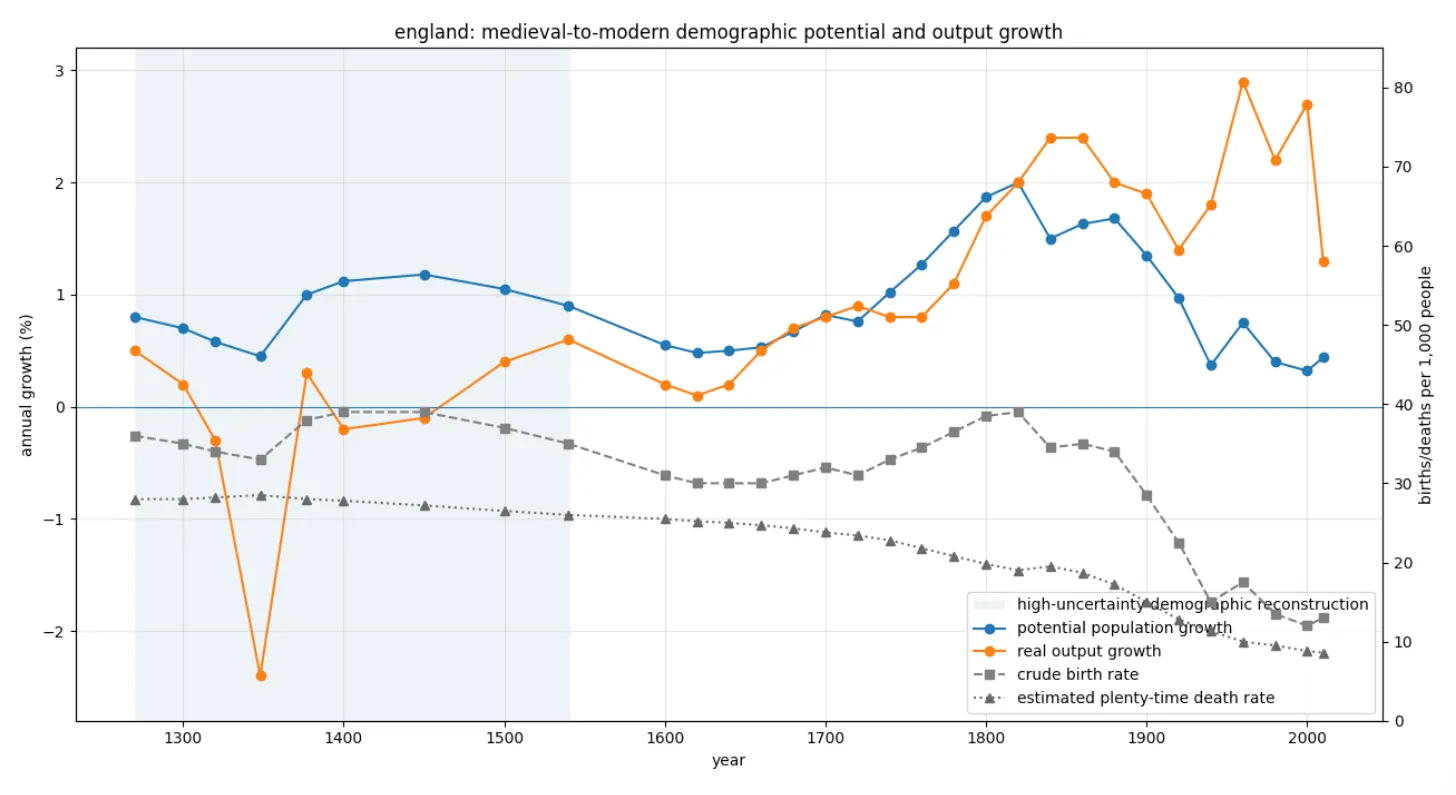
The following graph is what you get when you plot the birth rate, an estimated non-Malthusian death rate, the implied potential population growth rate, and economic growth from 1300 until today 1.
See anything interesting?
Well, it looks like potential population growth is consistently higher than economic growth for more than 400 years, until economic growth slowly starts catching up with it around 1650. It finally overtakes it consistently from roughly 1820: That should be the time by which the foundation for ever-growing abundance should have been laid, the escape from the Malthusian regime!
This inflection point can also be seen nicely when looking at the absolute economic output and population side-by-side.
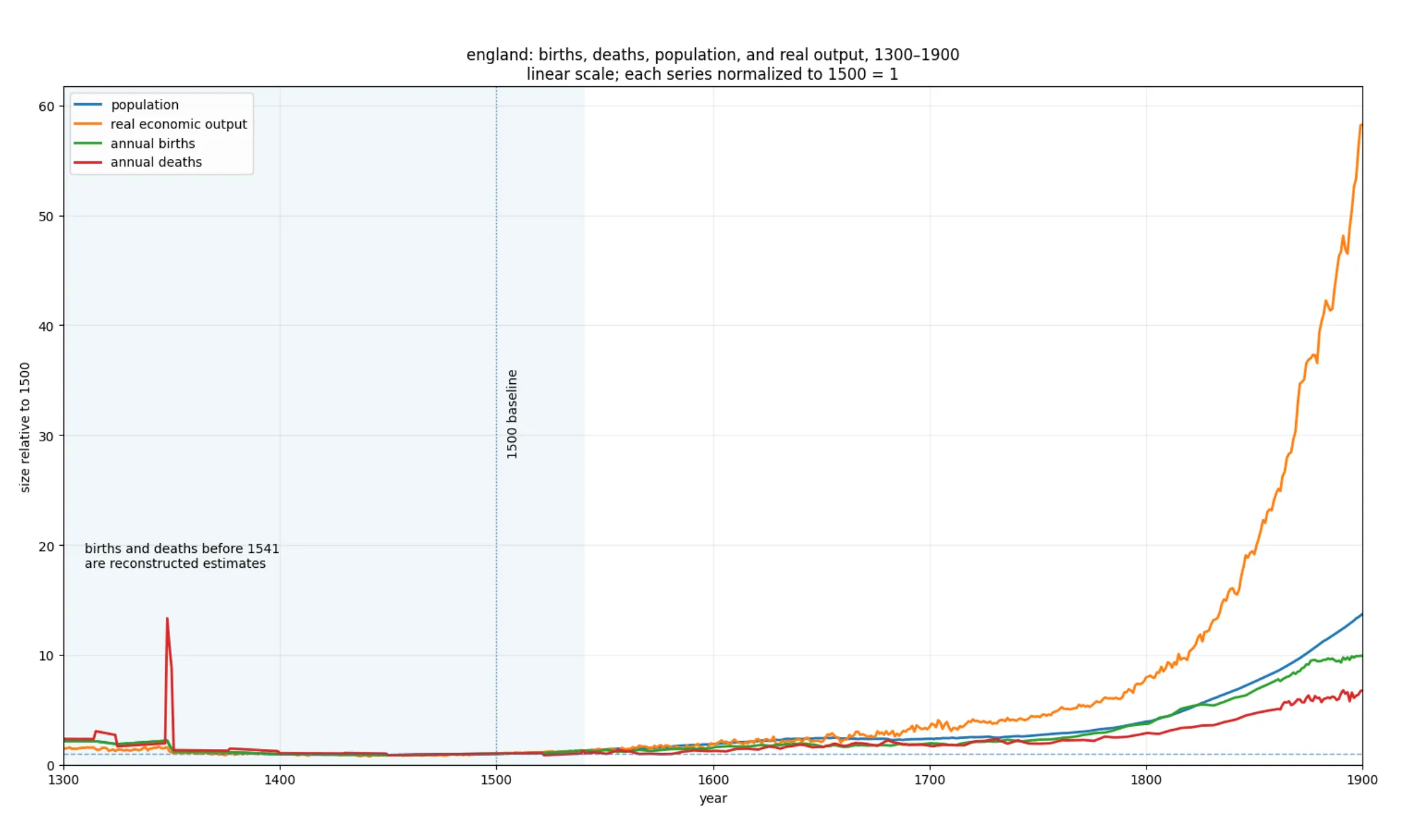
Around 1820, that was right around the time of the industrial revolution. So, was circa 1820 the time in which workers started living above the subsistence minimum, and slowly began flourishing, all thanks to the Industrial Revolution?
Engels Pause
Well, yes, but also not quite yet as it seems:
The book ‘The Condition of the Working Class in England’, written by none other than Friedrich Engels, who’d later go on to co-found modern communism, so radicalized by what he saw, describes the lives of British workers around 1840, 20 years after the theoretical end of the Malthusian regime we see around 1820.
In striking language, he describes workers as “not human beings; […] merely toiling machines”, with “no cause for surprise if [they], treated as brutes, actually become such”. He describes men who “would rather let their daughter beg than go into a factory” which are “perfect gates of hell”, or that “if the master is mean enough… his mill is also his harem”.
About the existential struggles of the worker of the time, he grimly writes: “The worker has nothing but his two hands, who consumes today what he earned yesterday, who is subject to every possible chance, and has not the slightest guarantee for being able to earn the barest necessities of life, whom every crisis, every whim of his employer may deprive of bread. This proletarian is placed in the most revolting, inhuman position conceivable for a human being. The slave is assured of a bare livelihood by the self-interest of his master, the serf has at least a scrap of land on which to live; each has, at worst, a guarantee for life itself. Everything that the proletarian can do to improve his position is but a drop in the ocean compared with the floods of varying chances to which he is exposed, over which he has not the slightest control.”
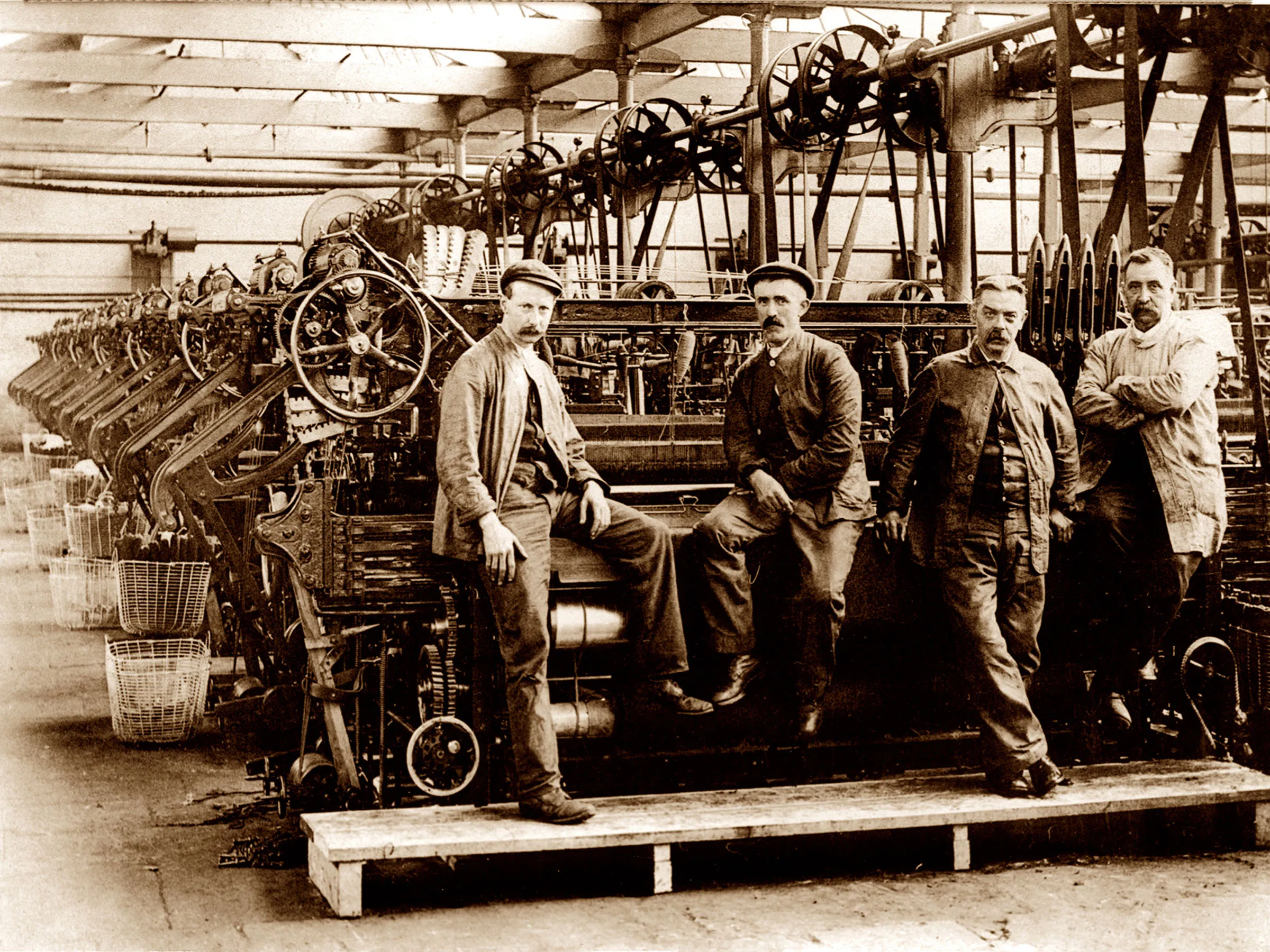
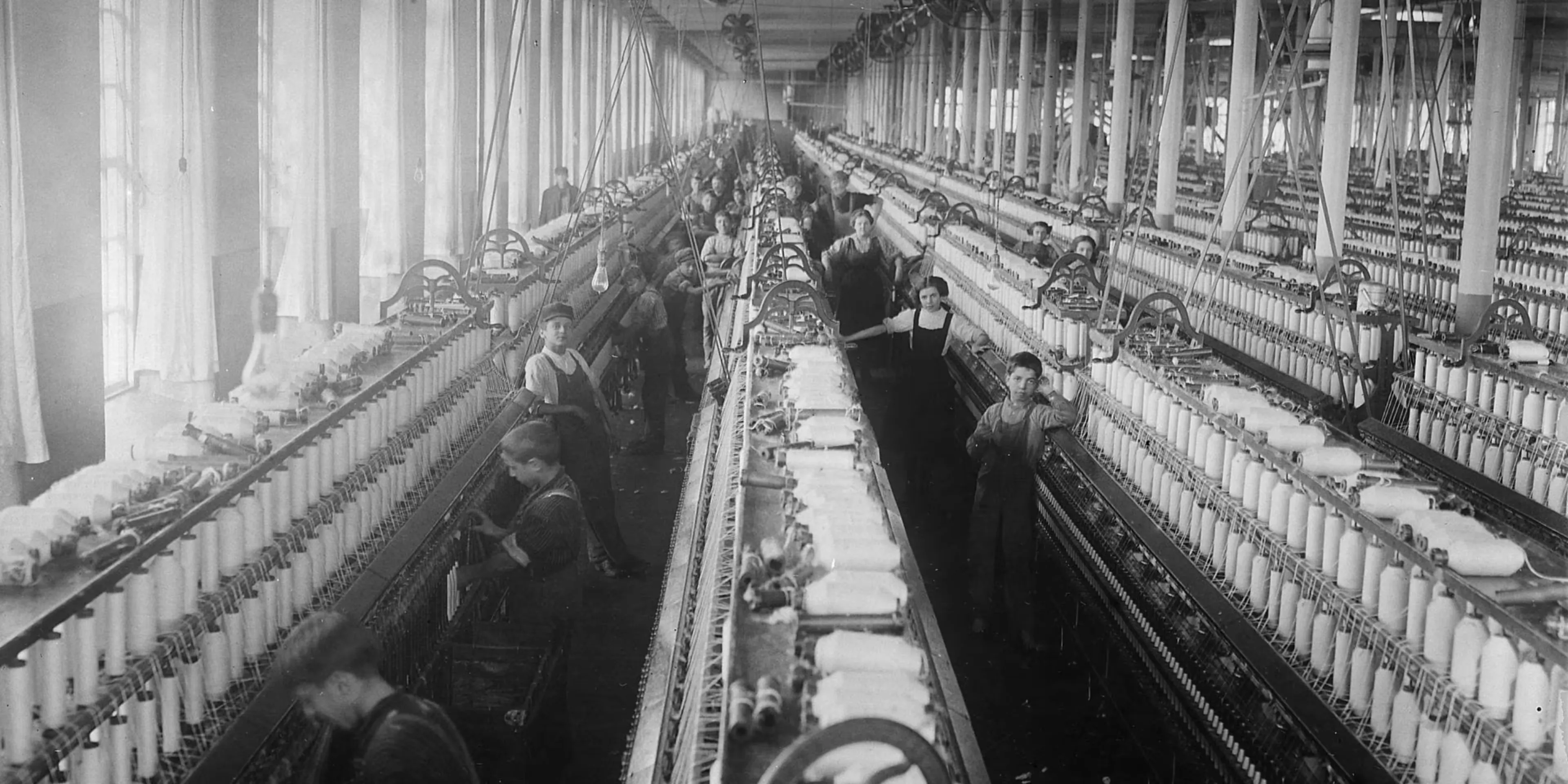
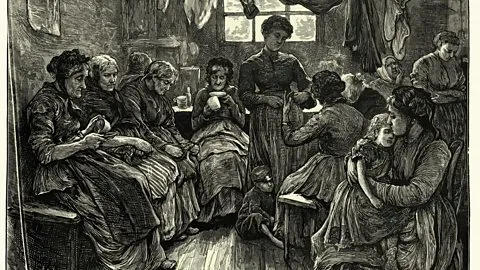
In fact, that period of the industrial revolution from 1760 until around 1850 was later described as ‘Engels’ Pause’, a term for the phenomenon that workers up to that point apparently didn’t yet really partake in the new growth and riches. And, as Engels would argue, were on-net possibly worse off than their peasant ancestors, who were maybe similarly poor but living in much better environments and enjoyed meaningfully higher levels of existential security!
Well, it seems like the pure Malthusian account, the fact that before 1820, output just wasn’t yet outgrowing the population, is actually sufficient to explain most of this pause, from 1760 to around 1820. Because, as we saw, it was only after 1820 and the escape from the Malthusian regime that the necessary precondition for worker flourishing was even given!
But that leaves the questions of what happened during the remainder of Engels’ Pause after 1820, specifically between 1820 and 1850, and what changed after 1850!
Who reaps the gains
The specifics still seem to be somewhat contested among economic historians, but the usual story is the following:
In those early decades (decades before 1840), a steady supply of rural workers moved to cities, which still had relatively fewer factories, machines and jobs, causing high labor supply relative to demand. This relative oversupply coincided with still-weak labor regulations not yet reining in extreme shifts, child labor and other problematic practices. Jobs were scarce relative to workers, thus making labor highly replaceable and paid very little.
With time however, from around 1840, capital owner profits had been increasingly reinvested into buying more machines and building more factories. These needed more and more hands to be operated, and made operators increasingly productive, which increasingly raised demand for labor. Simultaneously, some machines became more complex, requiring more specialized operators, and regulations were enacted reducing shift lengths and banning child labor — all of which further contributed to making labor relatively scarcer! Now it was the workers who increasingly became the limiting factor for factories to produce more, making them less replaceable and raising wages more and more. Additionally, associations and unions increased worker bargaining power, allowing them to more effectively demand higher wages.

The combination of these mechanisms, under post-Malthusian conditions, raised wages and allowed workers to capture more and more of the productivity increases. In some decades, median real wages ended up growing even faster than productivity: Workers were gaining more than capital-owners.
This happy cycle continued for much of the remaining 19th and early 20th century, fly-wheeling industrializing nations into modernity.
Putting it all together
So, the thing that ended up making the workers rich; The start of the trend that gave ordinary people in rich, industrialized countries privileges that only pre-modern kings could enjoy, seems to be a combination of three things:
-
- the Malthusian escape: reaching the state of output consistently growing faster than the population
-
- higher labor demand and higher productivity causing and allowing factories to pay more to workers
-
- higher bargaining power allowing workers to capture a larger share of per-worker output
It seems likely that none of these in isolation would’ve been enough to empower and liberate the commoners.
1 alone: Merely escaping the Malthusian limit would’ve not necessarily incentivized the ruling class, land-owners, or capital-owners to uplift the workers.
2 alone: Higher demand within a Malthusian regime was what happened in the times after a plague or war that killed a sizeable part of the workforce: Low supply relative to demand, leading to a transient rise in wages until population growth eats the gains and the population returns to subsistence.
3 alone: Merely having the bargaining power would’ve meant redistribution of an insignificant surplus, soon eaten by Malthusian dynamics. No real winners.
Only the co-occurrence of all three ensured the availability of resources, per-capita productivity and labor demand creating the preconditions and incentives for capital-owners to pay wages that grew with productivity, and the power of workers to demand that and improve overall living conditions via labor and housing regulations and public utilities.
Implications for the 21st century
We live in times of rapid technological change that many liken to the industrial revolution in speed, magnitude, and historical importance, or even predict to rise above it. The information revolution from computers, digitalization, and AI has as much potential to radically change our lives as the industrial revolution, for better or for worse.
It seems safe to expect that the post-Malthusian conditions will prevail and even strengthen, due to ever-rising productivity and the decline in fertility.
However, it will be less clear if machines and humans will remain complementary, and whether complementary labor demand will grow in the same way it did during the industrial revolution. Data suggests that rich industrialized nations have seen a decoupling of median real wage gains from productivity increases since the 1970s, due to rising inequality and globalization, a trend that some fear AI might accelerate.
Furthermore, the decline of every-day social clubs and societies, polarization, and the ‘algobrain’, along with the more fleeting employment structures of the gig economy may have contributed to a decline in union and association influence, and leave it an open question whether workers will retain the bargaining power to ask for keeping their share of the growing pie.
So, the very basis of our livelihood and wealth will still be present, the post-Malthusian condition, the dream time: Further increases in growth rate and associated population decline will only enhance it!
The key question will be whether the second and third dynamic — the demand for labor, and the bargaining power of labor — will remain, or whether the AI revolution could suddenly end this by asymptotically replacing human labor and/or disempowering it.
This question shall be our focus in Part II.
Footnotes
-
British output estimates from Bank of England and Broadberry et al., demographic reconstructions from Wrigley and Schofield and later Office for National Statistics data. Estimated non-Malthusian death rate is derived from estimating what the death rate would’ve been in times of plenty at that time. ↩